


DPF Cleaning: The Complete UK Guide to Blocked DPFs, Regeneration, Fault Codes and Cleaning
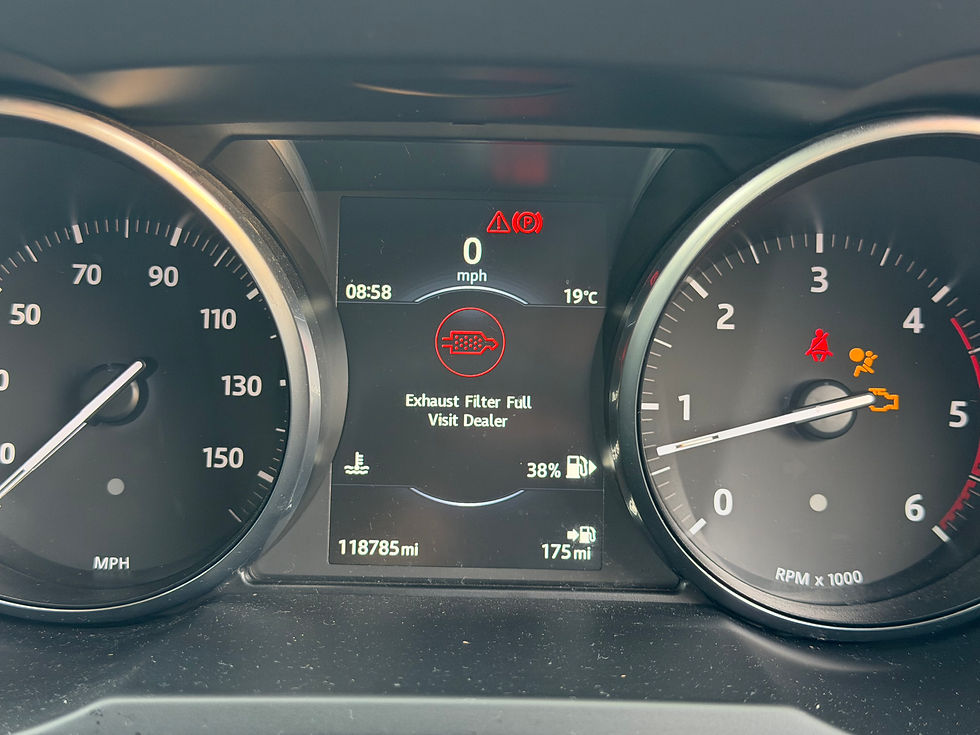
If you drive a modern diesel car, you may eventually see a DPF warning light, “Exhaust Filter Full”, “Exhaust Filter Full – See Dealer”, reduced engine performance or even limp mode.
A blocked Diesel Particulate Filter can be frustrating, but a warning does not automatically mean that the DPF needs replacing.
The correct solution depends on why the DPF has become restricted, how badly it is blocked and what the vehicle’s diagnostic data is showing.
At Advanced Remaps in Hartlepool, we diagnose and clean DPF systems on a wide range of diesel vehicles. We use diagnostic data, soot readings, differential pressure measurements and fault-code information to establish what is happening before recommending the appropriate solution.
In this guide, we’ll explain what a DPF does, why they become blocked, what regeneration means, common symptoms and fault codes, and when professional DPF cleaning may be appropriate.
What is a DPF?
DPF stands for Diesel Particulate Filter.
The DPF forms part of the exhaust system on modern diesel vehicles and is designed to trap particulate matter produced by the combustion process.
Over time, soot accumulates inside the filter. The vehicle is designed to periodically regenerate the DPF by raising exhaust temperatures and burning the accumulated soot.
The regeneration process turns much of the trapped soot into gases, leaving a smaller amount of non-combustible residue behind.
If regeneration cannot take place properly or is repeatedly interrupted, soot accumulation can increase and exhaust back pressure can rise.
This can eventually lead to warning lights, reduced performance and DPF-related fault codes.
Why Do DPFs Become Blocked?
There isn’t always one single reason why a DPF becomes restricted.
One of the most common contributing factors is short-distance driving.
Diesel vehicles that are mainly used for short journeys may not consistently reach the conditions required for successful regeneration.
Other possible causes include:
Frequent short journeys
Repeatedly interrupted regeneration cycles
Incorrect engine operating temperature
Faulty sensors
Exhaust temperature problems
EGR-related faults
Injector problems
Turbocharger problems
Excessive oil consumption
Incorrect engine oil
Other engine management faults
This is why simply clearing a DPF fault code isn’t necessarily a repair.
If an underlying fault is preventing regeneration, the DPF can become blocked again.
What Happens During DPF Regeneration?
Regeneration is the process the vehicle uses to reduce accumulated soot inside the DPF.
There are different types of regeneration depending on the vehicle.
Passive regeneration
Passive regeneration can occur when exhaust temperatures become sufficiently high during normal driving.
Active regeneration
The vehicle can deliberately increase exhaust temperatures to burn accumulated soot.
During an active regeneration, you may notice things such as:
Higher engine idle speed
Cooling fans running
Increased fuel consumption
A different engine note
A hot or acrid exhaust smell
Stop/start being temporarily unavailable
The exact strategy varies between manufacturers and vehicles.
Forced regeneration
A forced or workshop regeneration is initiated using diagnostic equipment.
This can sometimes be appropriate when normal regeneration has not successfully reduced the soot loading.
However, a forced regeneration isn’t suitable for every blocked DPF.
The condition of the filter and the reason for the blockage should be established first.
What Are the Signs of a Blocked DPF?
A DPF problem can present itself in several different ways.
Common symptoms include:
1. DPF warning light
A DPF or exhaust-system warning may appear on the dashboard.
2. Exhaust Filter Full message
Some vehicles display messages such as:
“Exhaust Filter Full”
or
“Exhaust Filter Full – See Dealer”
This indicates that the vehicle’s emissions system has detected a problem with the particulate filter.
3. Loss of power
As restriction increases, the vehicle may reduce engine performance to protect the engine and emissions system.
4. Limp mode
A heavily restricted DPF or associated fault can result in reduced-power or limp-home operation.
5. Frequent regeneration
If the vehicle appears to be attempting regeneration unusually frequently, it is worth investigating why.
6. Increased fuel consumption
Repeated regeneration attempts can increase fuel consumption.
7. Engine management light
A DPF-related fault can trigger the engine management light, particularly when the ECU detects excessive restriction or another fault affecting the emissions system.
What Does “Exhaust Filter Full – See Dealer” Mean?
This is one of the questions we are asked regularly.
The message generally means the vehicle has detected that the particulate filter is becoming excessively loaded or that regeneration has not successfully reduced the restriction.
It does not automatically mean the DPF needs replacing.
The correct next step is diagnosis.
A professional diagnostic check can establish information such as:
Stored fault codes
DPF calculated soot loading
Differential pressure
Exhaust temperature readings
Regeneration information
Sensor operation
Other faults affecting the emissions system
The important thing is to determine why the vehicle has reached this point.
What Is DPF Differential Pressure?
Differential pressure is an important measurement when diagnosing a DPF.
The vehicle uses pressure readings before and after the DPF to help determine how much restriction exists within the exhaust system.
If the pressure is excessively high, this can indicate significant restriction.
However, the reading must be interpreted correctly.
A pressure sensor, pipework problem or other fault can also produce abnormal readings.
This is why looking at one number without considering the rest of the diagnostic data can lead to the wrong conclusion.
Soot vs Ash: What’s the Difference?
This is particularly important when discussing DPF cleaning.
Soot
Soot is produced by the combustion process and is what the vehicle’s regeneration system is primarily designed to burn away.
Ash
Ash is non-combustible residue that can accumulate inside the DPF over time.
Unlike soot, ash isn’t simply burned away during a normal regeneration.
This means a vehicle can sometimes show a relatively low calculated soot loading while still having significant physical restriction.
The actual condition of a DPF therefore shouldn’t always be judged from the calculated soot figure alone.
A combination of diagnostic readings, pressure measurements and vehicle history gives a much better picture.
Can a Blocked DPF Be Cleaned?
In many cases, a DPF can be cleaned rather than immediately replaced.
However, not every DPF should be cleaned.
A filter that is physically damaged, melted or otherwise beyond recovery may require replacement.
Where the DPF is physically sound but restricted by accumulated deposits, professional cleaning may be an option.
At Advanced Remaps, we diagnose the vehicle first and recommend the appropriate cleaning procedure based on the condition of the DPF and the vehicle.
DPF Cleaning vs DPF Replacement
Replacing a DPF can be expensive, particularly on premium vehicles.
Before committing to replacement, it can therefore be worthwhile establishing whether the existing filter is physically serviceable.
Professional cleaning can potentially restore exhaust flow where the filter itself remains suitable for continued use.
However, cleaning the DPF doesn’t automatically fix an underlying engine or emissions fault.
For example, if an injector, EGR system, temperature sensor or pressure sensor is causing excessive soot production or preventing regeneration, that issue needs to be addressed as well.
Common DPF Fault Codes
There are many DPF-related diagnostic codes, and the exact codes depend on the vehicle manufacturer.
Some codes we regularly see include:
P2463
Diesel Particulate Filter Restriction – Soot Accumulation
This code can indicate excessive DPF restriction associated with soot accumulation.
P2002
This relates to DPF efficiency being below the expected threshold.
P2452 / P2453
These codes can relate to the DPF differential pressure sensor or its circuit, depending on the vehicle.
P242F
This can relate to excessive accumulation of particulate matter in the DPF.
A fault code is a starting point for diagnosis rather than a complete diagnosis by itself.
Range Rover & Land Rover DPF Problems
Range Rover and Land Rover diesel models are among the vehicles we regularly see with DPF-related issues.
A vehicle displaying:
“Exhaust Filter Full – See Dealer”
may also store additional fault codes.
For example, P2463 can indicate DPF restriction due to soot accumulation.
If the vehicle is repeatedly attempting regeneration, experiencing reduced performance or entering limp mode, the DPF system should be properly diagnosed.
Don’t simply clear the fault code and assume the problem has been fixed.
Jaguar DPF Problems
Jaguar diesel vehicles can also suffer from DPF restriction and regeneration problems.
Symptoms can include:
DPF warning
Engine management light
Loss of power
Frequent regeneration
Increased fuel consumption
Limp mode
A diagnostic assessment can help determine whether the problem is the DPF itself or another fault preventing the system from operating correctly.
How We Diagnose DPF Problems
At Advanced Remaps, our approach is based on diagnosis rather than simply clearing fault codes.
Depending on the vehicle, we can assess:
DPF soot readings
Differential pressure
Fault codes
Regeneration-related information
Sensor readings
Exhaust temperature data
Engine management faults
Vehicle history and symptoms
We then use the information available to determine the most appropriate next step.
This could be further diagnostics, regeneration, DPF cleaning or repair of another fault that is causing the DPF to become restricted.
Real Workshop Diagnostics Matter
One of the biggest advantages of using a specialist is that we’re dealing with these problems on real vehicles every day.
A generic internet article can tell you that a DPF is blocked.
A proper diagnostic assessment can help establish why it is blocked and what condition the filter is actually in.
For example, we’ve seen vehicles where the calculated soot figure doesn’t appear particularly high, but the measured pressure is excessive.
That can point towards significant physical restriction that needs further investigation.
This is why we don’t recommend relying on a single soot figure or simply clearing a fault code.
How Much Does DPF Cleaning Cost?
The cost of DPF cleaning varies depending on:
Vehicle
DPF condition
Level of restriction
Diagnostic requirements
Cleaning method required
Whether additional faults are present
A proper quote should therefore be based on the condition of the vehicle rather than simply offering the same procedure to every customer.
At Advanced Remaps, we can diagnose the vehicle first and explain what we have found before carrying out further work.
Should You Keep Driving With a DPF Warning?
If your vehicle has displayed a DPF warning, it shouldn’t simply be ignored.
Continuing to drive with an increasingly restricted exhaust system can lead to further problems.
The correct action depends on the vehicle and the severity of the restriction.
If the vehicle has entered limp mode, has multiple warning lights or is displaying an “Exhaust Filter Full – See Dealer” message, professional diagnosis is recommended.
Can I Just Take My Car on the Motorway?
You may have heard that taking a diesel vehicle on a long motorway journey will clear a blocked DPF.
Sometimes a vehicle with an early-stage DPF warning can successfully complete a normal regeneration under the correct driving conditions.
However, this isn’t a universal solution.
If the DPF is already severely restricted, if regeneration isn’t being permitted, or if another fault is preventing regeneration, simply driving faster isn’t going to solve the underlying problem.
That’s why diagnosis is important.
How Can You Help Prevent DPF Problems?
There is no guaranteed way to prevent every DPF problem, but sensible vehicle use and regular maintenance can help.
Some useful practices include:
Avoid relying exclusively on very short journeys with a diesel vehicle
Don’t ignore DPF warning lights
Investigate repeated regeneration
Keep the engine properly serviced
Use the correct specification engine oil
Deal with engine warning lights promptly
Have recurring DPF problems properly diagnosed
Most importantly, if your DPF keeps blocking, don’t just keep cleaning it without investigating why.
DPF Cleaning in Hartlepool & the North East
Advanced Remaps provides DPF diagnostics and cleaning in Hartlepool, serving customers across the surrounding North East area.
We regularly deal with DPF problems on cars and vans from manufacturers including:
Land Rover • Range Rover • Jaguar • BMW • Mercedes • Ford • Volkswagen • Audi • Peugeot • Citroën • Vauxhall • Volvo • Toyota
We also serve customers from surrounding areas including:
Hartlepool • Billingham • Stockton • Middlesbrough • Peterlee • Durham and surrounding areas
If your vehicle is showing a DPF warning, exhaust filter warning, loss of power or a DPF-related fault code, contact us to arrange a diagnostic assessment.
Frequently Asked DPF Questions
How do I know if my DPF is blocked?
Common signs include a DPF warning light, exhaust filter warning, loss of power, limp mode, increased fuel consumption and frequent regeneration attempts.
Can a DPF be cleaned instead of replaced?
Sometimes. The DPF needs to be assessed first to determine whether it is physically suitable for cleaning.
Does a DPF cleaner fix every blockage?
No. The cause and severity of the restriction need to be established first.
Does regeneration remove ash?
Regeneration primarily burns accumulated soot. Non-combustible ash is different and can remain within the filter.
What does P2463 mean?
P2463 generally relates to diesel particulate filter restriction associated with soot accumulation.
Can I drive with an exhaust filter full warning?
You shouldn’t simply ignore it. The appropriate action depends on the vehicle, warning level and diagnostic condition of the DPF.
Does a DPF warning always mean I need a new DPF?
No. Diagnosis is required before deciding whether cleaning, regeneration, repair or replacement is appropriate.
Need Your DPF Checked?
If your vehicle is showing:
DPF WARNING
EXHAUST FILTER FULL
EXHAUST FILTER FULL – SEE DEALER
ENGINE MANAGEMENT LIGHT
LOSS OF POWER
LIMP MODE
or a DPF-related fault code, don’t guess at the problem.
At Advanced Remaps, we can carry out professional DPF diagnostics and assess the condition of the system before recommending the appropriate solution.
Advanced Remaps – Hartlepool
Professional DPF Diagnostics & Cleaning
Serving Hartlepool and the wider North East
Contact us today to discuss your DPF problem.
Important
DPF systems vary between manufacturers and models. Diagnostic information and repair procedures should be assessed for the specific vehicle. DPF removal is not a substitute for repair and can have legal and MOT consequences in the UK. GOV.UK states that the MOT inspection includes checking for the presence of a DPF on applicable vehicles. (GOV.UK)



Comments